Medieval (400 - 1400)
Following the fall of the Roman Empire, jewelry styles shifted dramatically across Europe and the Byzantine world. Designs became more symbolic and often reflected religious devotion, warrior culture, and tribal identity.
Gold, garnets, and intricate cloisonné enamel were widely used. Pieces such as brooches, fibulae, and pendants were richly decorated with geometric patterns and stylized animal forms. These objects served both functional and ceremonial roles, fastening garments while displaying wealth and allegiance.
Jewelry of the High Medieval period reflected the deep influence of religion and social hierarchy. Rings, pendants, and brooches often carried inscriptions, gemstones believed to possess protective properties, or devotional imagery.
Sapphires, rubies, and pearls were particularly prized during this time. Jewelry was worn not only for adornment but also as a symbol of rank, faith, and allegiance. Surviving examples reveal the growing sophistication of European goldsmiths as they refined techniques that would later flourish during the Renaissance.
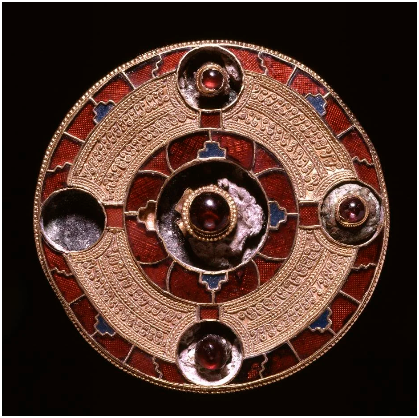
Early Medieval Gilded Disc Brooch with Garnet Cabochons & Enamel
A richly symbolic disc brooch featuring intricate goldwork, deep red garnet cabochons, and vibrant enamel accents arranged in a radial, cross-like composition. The detailed surface ornamentation and bold geometric structure reflect early medieval craftsmanship, where jewelry served both decorative and cultural significance. Striking and ceremonial in presence, this piece embodies power, protection, and status.