Baroque / Rococo (1600 – 1750)
Era Snapshot: Spanning the 17th through the mid-18th century, the Baroque and Rococo periods reflect a continuous evolution in decorative arts—from bold grandeur to graceful refinement. Together, they represent an era defined by exceptional craftsmanship, ornamentation, and an enduring pursuit of beauty through form and detail.
Baroque design (c. 1600–1730) is characterized by scale, symmetry, and dramatic presence. Objects from this period often feature deep carving, rich materials, and intricate surface decoration. Furnishings, silver, and decorative objects convey a sense of weight and permanence, with compositions that emphasize balance and visual impact.
Rococo (c. 1730–1770) introduces a lighter, more expressive aesthetic. Forms become asymmetrical and fluid, with motifs drawn from nature—scrolls, shells, florals, and flowing lines. Giltwood mirrors, porcelain, and smaller decorative objects reflect a sense of movement and intimacy, favoring elegance and playfulness over the formality of earlier Baroque design.
Together, Baroque and Rococo decorative arts illustrate a seamless progression—from structured magnificence to refined delicacy—while maintaining a shared dedication to artistry and detail. These works continue to captivate collectors for their craftsmanship, expressive design, and their ability to transform functional objects into enduring works of art.
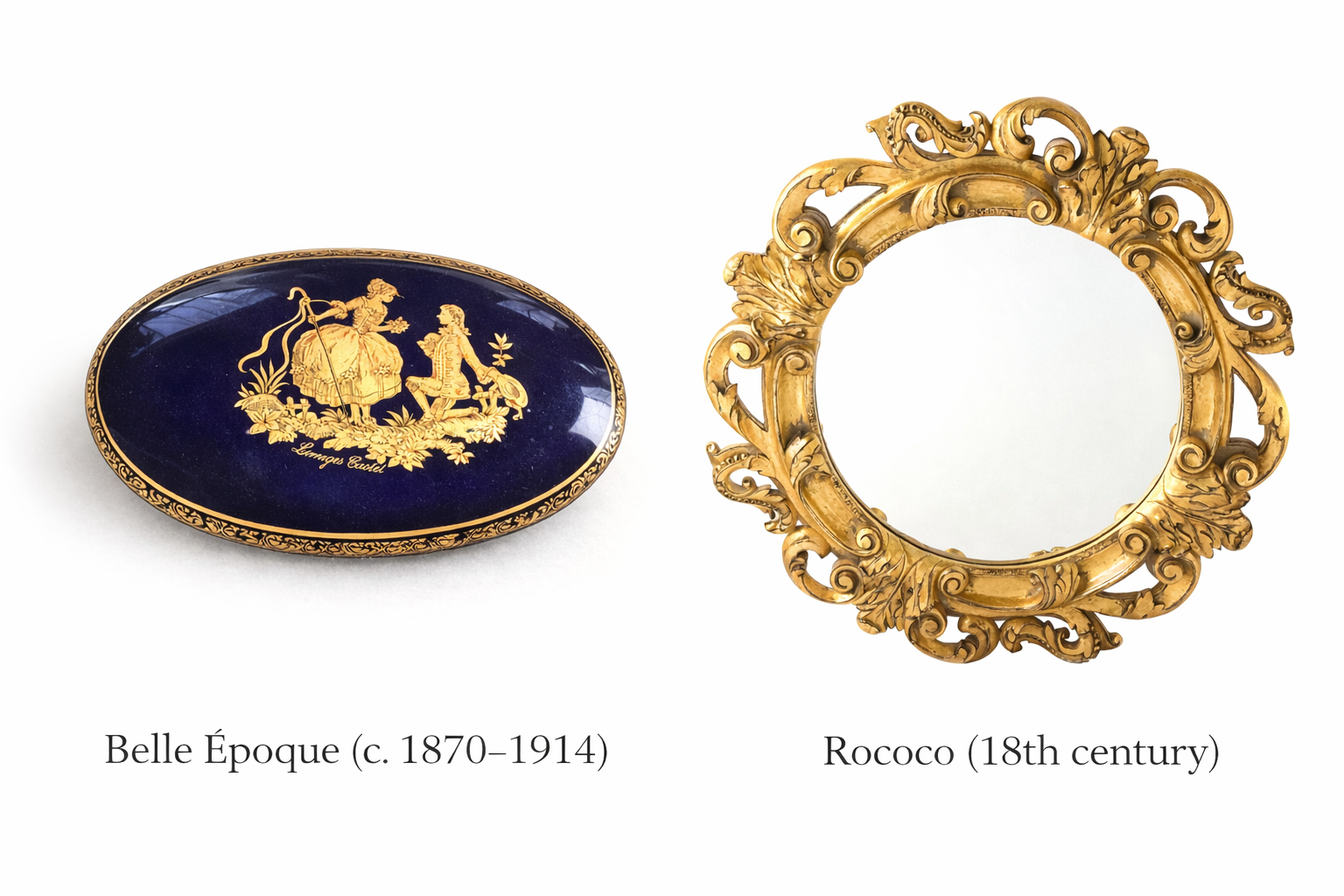
Baroque Porcelain Covered Dish & Rococo Giltwood Mirror
Baroque (17th–Early 18th Century) – Porcelain Covered Dish
Baroque design is characterized by drama, grandeur, and richly detailed ornamentation. Decorative porcelain from this period often features bold contrasts, gilt embellishments, and theatrical figural scenes, reflecting a cultural emphasis on opulence, movement, and visual impact.
Rococo (18th Century) – Gilt Carved Mirror Frame
Rococo design is defined by its fluid movement, asymmetry, and ornate natural motifs. Gilt mirror frames from this period feature scrolling acanthus leaves, shell forms, and intricate carvings, embodying the lightness and playful elegance that followed the heavier drama of the Baroque era.