Neoclassical (1760 - 1830)
Emerging in the late 18th century, Neoclassical jewelry reflects a renewed fascination with the art and ideals of ancient Greece and Rome. Inspired by archaeological discoveries at Pompeii and Herculaneum, as well as the cultural influence of the Grand Tour, this period embraced clarity of form, symmetry, and restrained elegance.
Jewelry from this era often features classical motifs such as laurel wreaths, urns, mythological figures, and architectural elements. Cameos and intaglios—carved in shell, agate, or other hardstones—became defining elements, frequently depicting profiles of gods, goddesses, and historical figures. These pieces were not only decorative but also intellectual, reflecting an appreciation for antiquity and classical learning.
Gold settings tend to be refined and balanced rather than ornate, allowing the carved or symbolic elements to take prominence. Micro mosaic work, particularly from Italy, also gained popularity, translating ancient imagery into intricate compositions of colored glass tesserae.
Neoclassical jewelry embodies a shift away from the ornate excess of earlier periods, favoring instead a sense of order, proportion, and timeless sophistication. Today, these pieces are valued for their craftsmanship, historical significance, and their direct connection to the enduring legacy of the classical world.
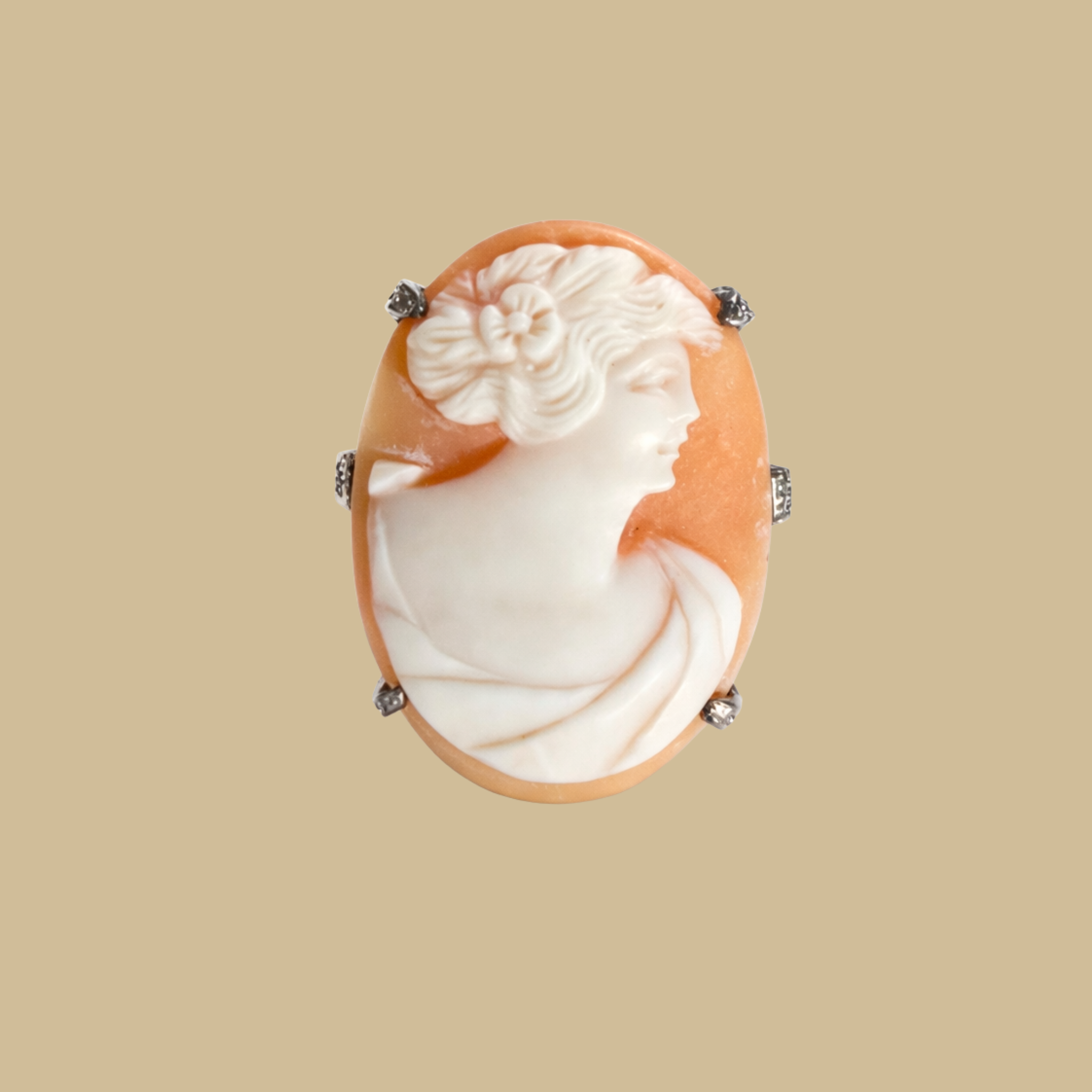
Neoclassical Carved Shell Cameo Ring with Diamond Accents
A timeless cameo ring featuring a finely carved profile of a classical woman in warm-toned shell, set against a soft coral ground. Framed with delicate diamond accents, the piece reflects Neoclassical ideals of beauty, grace, and antiquity. Elegant and enduring, it captures the artistry of traditional cameo carving with a refined, heirloom presence.