This item is an Art Deco porcelain 'Scarf Dancer' flower frog figurine, often referred to simply as a "flower frog" or "florist frog". The figurine dates back to the 1920s or 1930s and was commonly manufactured in Germany by various companies, including Coronet and Erphila Fayence.
Key Details
Style: The design is characteristic of the Art Deco movement, popular in the 1920s and 1930s, featuring stylized figures and flowing lines. (Size: 4.4” W x 6” T)
Function: These pieces functioned as a "flower frog" or "posy holder," where flower stems were inserted into the holes in the base to create an arrangement, often paired with a shallow bowl (which is not pictured).
Origin: Many of these specific designs were produced in Germany by various potteries, with some examples bearing marks such as "Erphila Fayence" or "Coronet Germany". Other producers like Cowan Pottery in the U.S. made similar, highly collectible designs.
Condition: The visible "CO" marking near the bottom edge might be an abbreviation or a partial mark. Without a clear view of the full base marking, it is difficult to determine the exact manufacturer. The white glossy glaze appears intact.
This item is an Art Deco porcelain 'Scarf Dancer' flower frog figurine, often referred to simply as a "flower frog" or "florist frog". The figurine dates back to the 1920s or 1930s and was commonly manufactured in Germany by various companies, including Coronet and Erphila Fayence.
Key Details
Style: The design is characteristic of the Art Deco movement, popular in the 1920s and 1930s, featuring stylized figures and flowing lines. (Size: 4.4” W x 6” T)
Function: These pieces functioned as a "flower frog" or "posy holder," where flower stems were inserted into the holes in the base to create an arrangement, often paired with a shallow bowl (which is not pictured).
Origin: Many of these specific designs were produced in Germany by various potteries, with some examples bearing marks such as "Erphila Fayence" or "Coronet Germany". Other producers like Cowan Pottery in the U.S. made similar, highly collectible designs.
Condition: The visible "CO" marking near the bottom edge might be an abbreviation or a partial mark. Without a clear view of the full base marking, it is difficult to determine the exact manufacturer. The white glossy glaze appears intact.

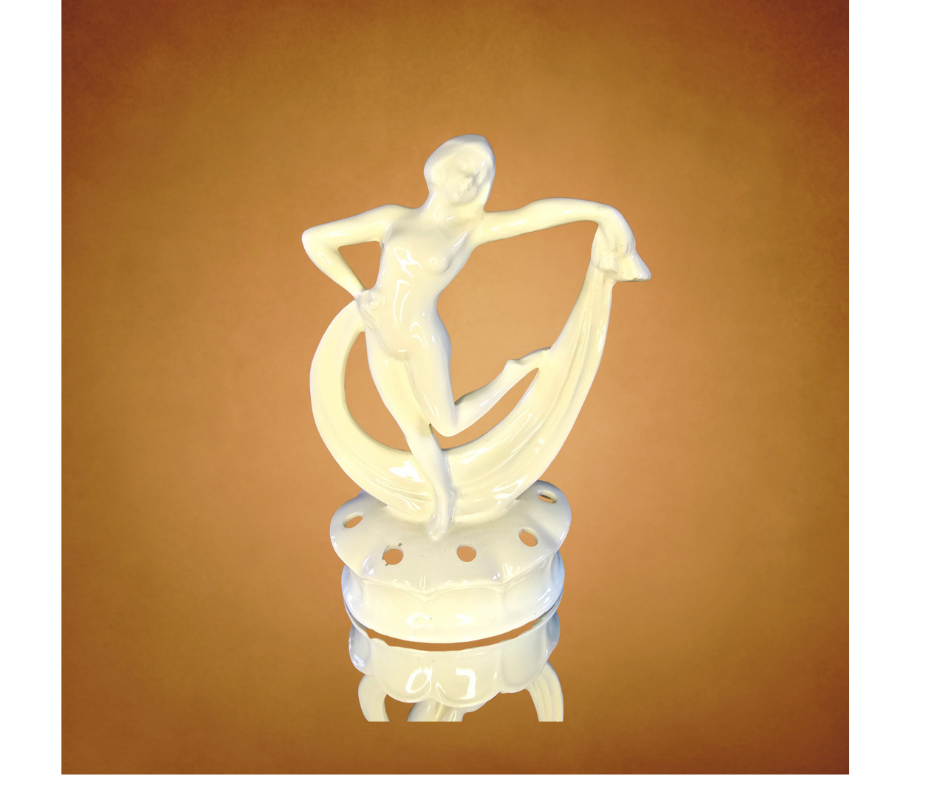 Image 1 of 6
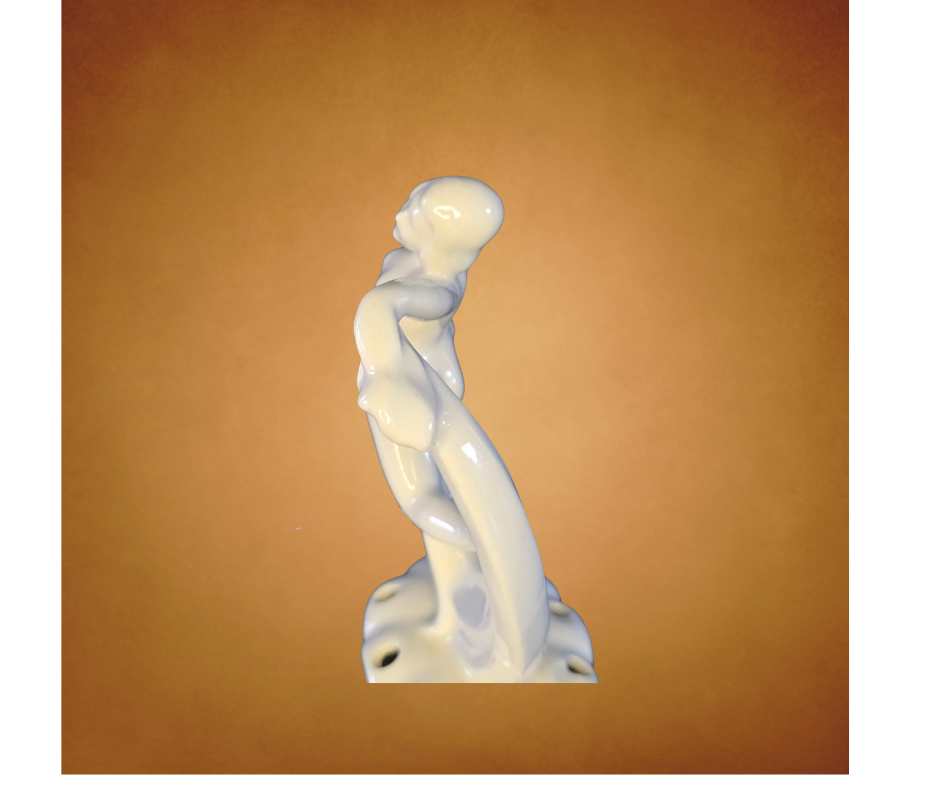 Image 2 of 6
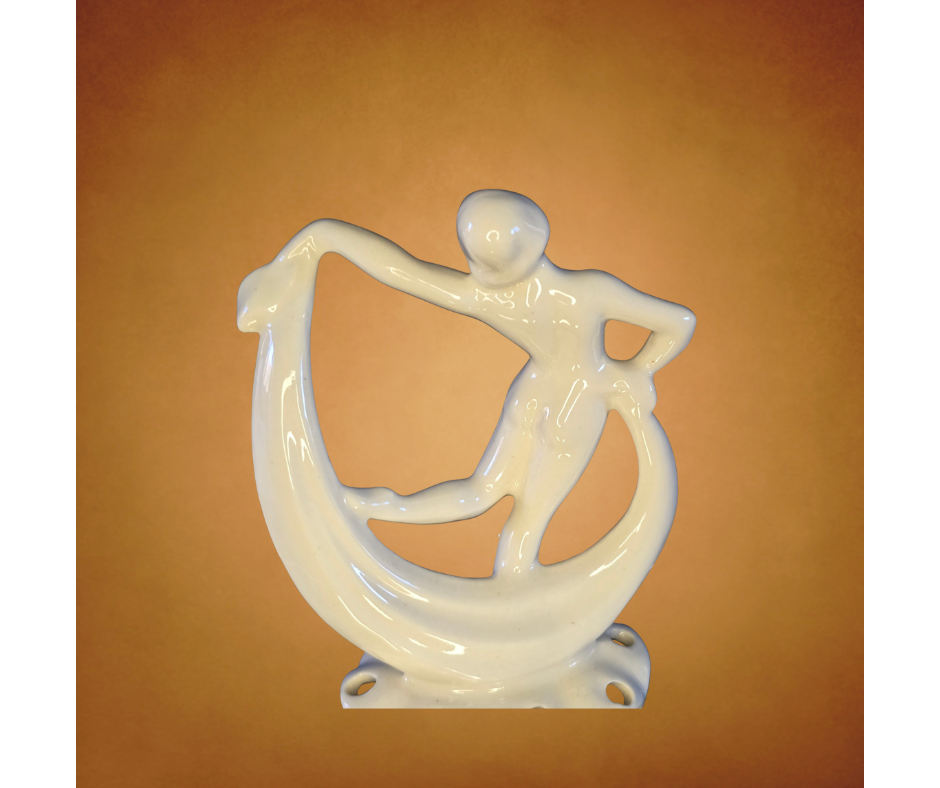 Image 3 of 6
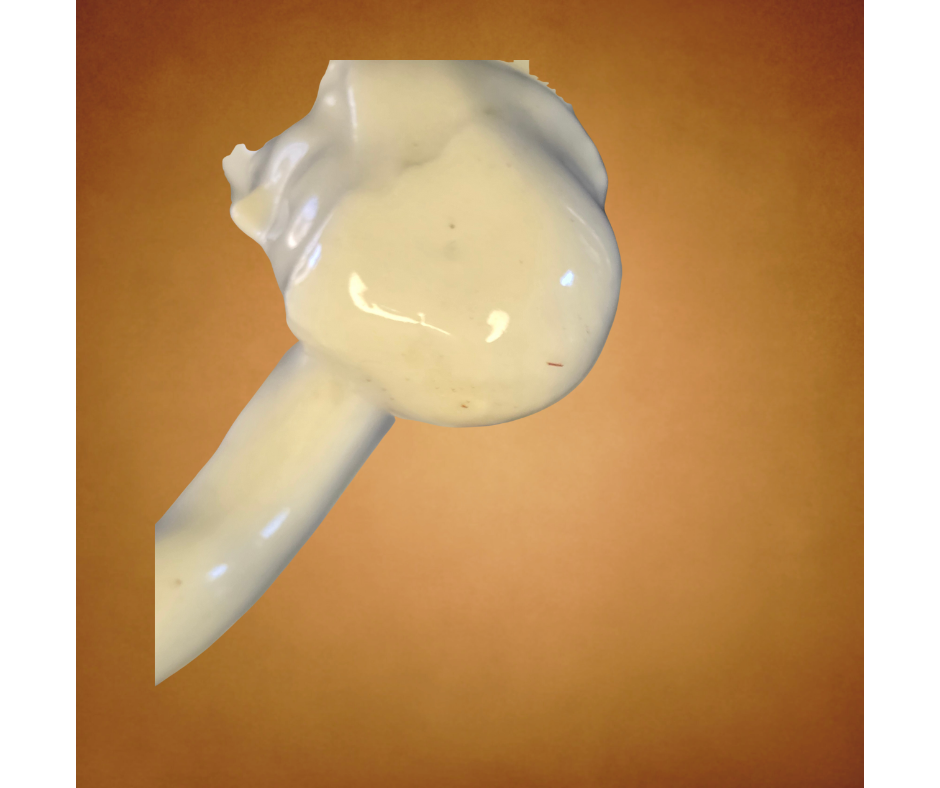 Image 4 of 6
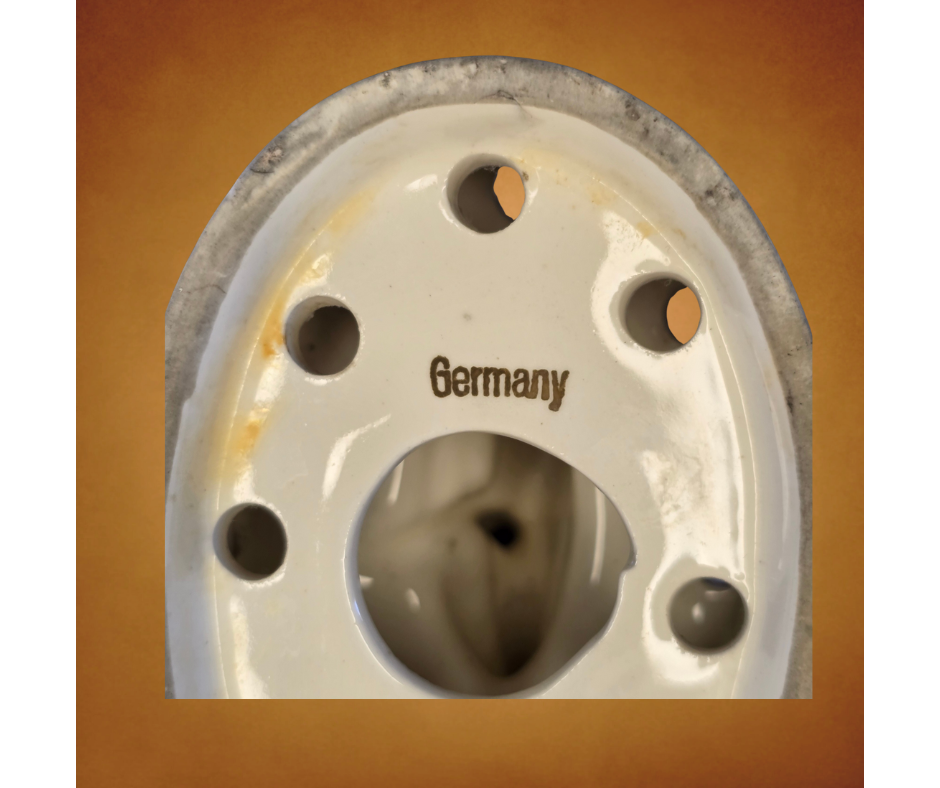 Image 5 of 6
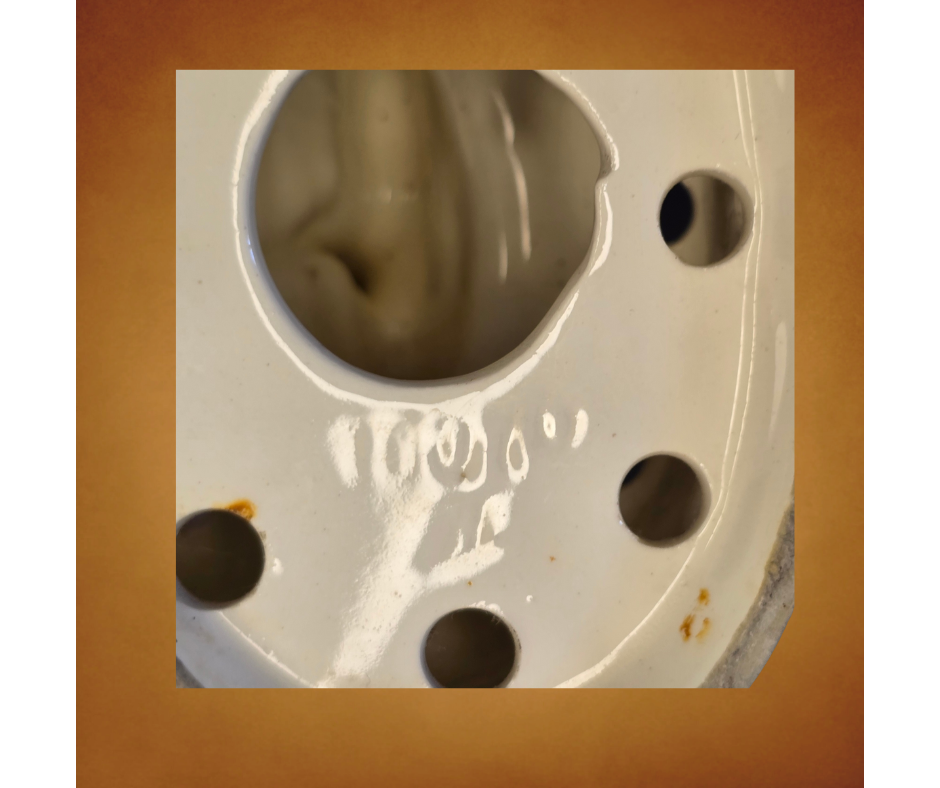 Image 6 of 6